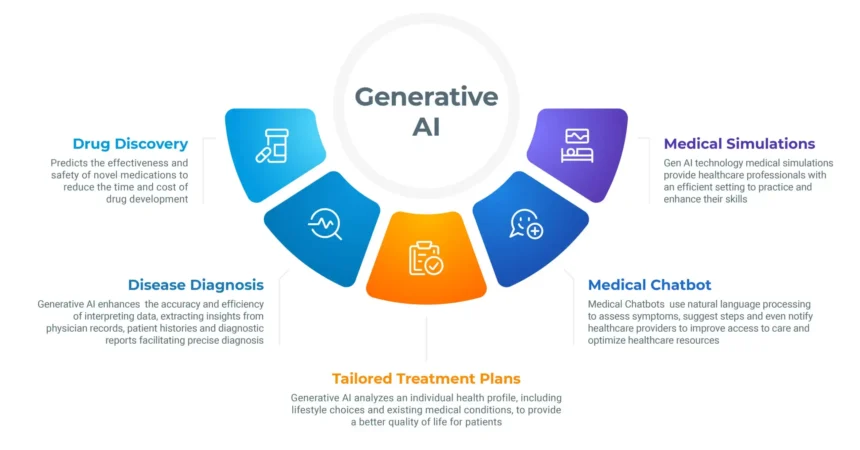
The future of generative AI in healthcare is poised to bring about groundbreaking advancements that will further transform patient care. One anticipated trend is the integration of AI with the Internet of Medical Things (IoMT), which will enable continuous monitoring and real-time data analysis. Wearable devices and remote monitoring tools powered by AI will provide clinicians with comprehensive insights into patient health, facilitating proactive interventions.
Another emerging trend is the use of AI in precision medicine. By analyzing genetic information along with environmental and lifestyle factors, AI can assist in developing personalized treatment plans tailored to an individual’s unique profile. This approach promises to improve therapeutic outcomes and minimize adverse effects, marking a significant shift from the traditional one-size-fits-all model of healthcare.
As AI technology continues to evolve, its application in drug discovery and development is expected to accelerate. AI algorithms can predict how new drugs will interact with the human body, optimizing the drug discovery process and reducing the time and cost associated with bringing new treatments to market. These advancements hold promise for addressing complex diseases and improving global health outcomes https://dedicatted.com/services/generative-ai/healthcare.
Generative AI Tools and Technologies Used in Healthcare
Several cutting-edge generative AI tools and technologies are currently being utilized in the healthcare sector to enhance patient care and operational efficiency. These tools include natural language processing (NLP) systems, which are used to analyze clinical notes and extract relevant information for patient diagnosis and treatment. NLP helps in summarizing patient records, thereby reducing the time clinicians spend on documentation.
Machine learning algorithms are another vital component of AI in healthcare. These algorithms analyze large datasets to identify patterns and predict outcomes, aiding in disease diagnosis, patient risk stratification, and treatment optimization. In radiology, computer vision technology powered by AI is employed to interpret medical images with high accuracy, supporting radiologists in detecting anomalies that might be missed by the human eye.
Moreover, AI-powered chatbots and virtual assistants are increasingly being adopted to improve patient interaction and support. These tools provide patients with 24/7 access to medical information, appointment scheduling, and medication reminders, thereby enhancing patient engagement and adherence to treatment plans. The integration of these AI technologies into healthcare systems is reshaping how services are delivered and experienced by both patients and providers.