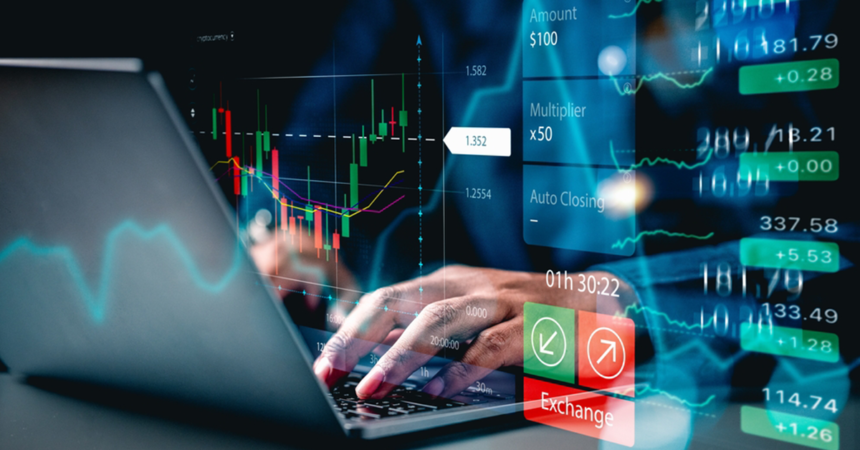
For any active trader, clicking the execution button is a moment of trust. You spot a perfect setup, calculate your risk, and expect to enter the market at the exact price flashing on your screen. Yet, far too often, the market fills your order at a slightly different, less favorable price. This gap is known as slippage, and keeping it at bay is one of the biggest challenges you will face.
What exactly is slippage, and why does it keep happening to my trades?
Slippage is simply the difference between the price you expect to get when you submit an order and the actual price at which the trade is executed. It is not a sign of broker manipulation; rather, it is a reflection of real-time market mechanics.
Think of it like booking a ride-share during peak hours. The app might quote you one price, but by the time you hit confirm a few seconds later, the price has adjusted due to high demand. In the forex market, prices move in milliseconds. If the market is moving fast, or if there are not enough buyers and sellers at your exact price, your order gets bumped to the next best available price in the broker’s system.
How does a broker’s spread connect to the amount of slippage I experience?
While they seem like two different things, spreads and slippage are deeply intertwined. The spread is the gap between the buy and sell price—essentially a transaction fee built into the market.
When you trade through low spread forex brokers, it usually means you are connected to a deep, highly active pool of global banks and liquidity providers. This deep liquidity acts like a heavily crowded marketplace. Because there are thousands of traders active at every tiny price fraction, your orders get matched and filled almost instantly. Conversely, wide spreads signal a thin, sluggish market where finding someone to take the other side of your trade takes longer, leaving the door wide open for the price to slip before execution.
Can you explain how this works with a simple trading example?
Let’s look at how this plays out in a live trade. Suppose you want to buy the EUR/USD at 1.0850.
If you are using a premium broker with tight spreads, the order book is packed with depth. The broker finds an immediate match, and you get filled exactly at 1.0850. Now, let us say you are trading with a broker that has wider spreads. The lack of immediate liquidity means your request has to travel further up the “order book” to find an available seller. By the time a match is found, the price has ticked up, and you get filled at 1.0852. Those two extra pips might not sound like much, but if you trade frequently, it is like paying a hidden tax on every single position you open.
Why is avoiding slippage so critical for short-term strategies like scalping?
For day traders and scalpers, slippage is an absolute system killer. If your strategy aims to capture quick moves of 5 to 10 pips, losing even a single pip to poor execution completely wrecks your risk-to-reward ratio.
Imagine running a delivery business where your profit margin on each delivery is only two dollars. If an unexpected toll road suddenly costs you an extra dollar on every trip, your business model falls apart. That is exactly what negative slippage does to a high-frequency trading routine. Utilizing tight spreads and fast execution speeds ensures you get in and out of the market cleanly, keeping your hard-earned profits in your account rather than leaving them on the table.
What tools can I use alongside low spreads to achieve near-zero slippage?
While choosing the right broker infrastructure is half the battle, your choice of order types does the rest. If you use standard market orders, you are telling the system to “fill me at any price,” which invites slippage during volatile news events.
To protect yourself, try using limit orders. A limit order specifies the maximum price you are willing to pay, ensuring your trade executes at your exact target or not at all. Additionally, check if your platform allows you to set a “slippage tolerance.” This setting tells the platform to cancel the trade automatically if the execution price deviates by more than a tiny fraction of a pip.
How do I identify a broker that actually delivers these tight execution conditions?
You want to look for brokers that are transparent about their execution speeds and liquidity sources. Look for features like No Dealing Desk (NDD) or Electronic Communication Network (ECN) execution models, which route your orders directly to global markets rather than processing them internally.
It is also wise to test their performance using a micro account during peak trading hours, such as the London and New York session overlap. Reading up on forex trading for beginners can help you understand how to benchmark these technical features before risking larger sums of capital.
Summary
Slippage and wide spreads are silent profit drains that can quietly turn a winning strategy into a losing one. By aligning your routine with a broker that offers tight spreads and robust, high-speed execution technology, you remove unnecessary transaction friction. Always couple a great broker setup with smart trading habits—like using limit orders and trading during peak liquidity hours—to keep your entry points precise and your trading routine highly efficient.